
Air pollution in Nairobi is more than just a statistic; it’s a daily struggle for millions. From traffic fumes to burning waste, the city’s air often carries invisible threats to health and well-being. But this year, Nairobi took a bold step forward. On the International Day of Clean Air for Blue Skies, Nairobi amplified its commitment to cleaner air through the ongoing #BreatheNairobi campaign, a grassroots initiative backed by the Breathe Cities Initiative.
Putting Communities at the Centre
In informal settlements such as Mathare, Kibra, and Mukuru, over 400 residents came together to take part in neighbourhood clean-ups, but these efforts went far beyond simply picking up litter. Each clean-up was preceded by hands-on training sessions where participants learned how to sort waste at the source, compost organic materials, and recycle plastics. These practical skills gave residents the tools to manage waste more responsibly and reduce harmful emissions in their communities.
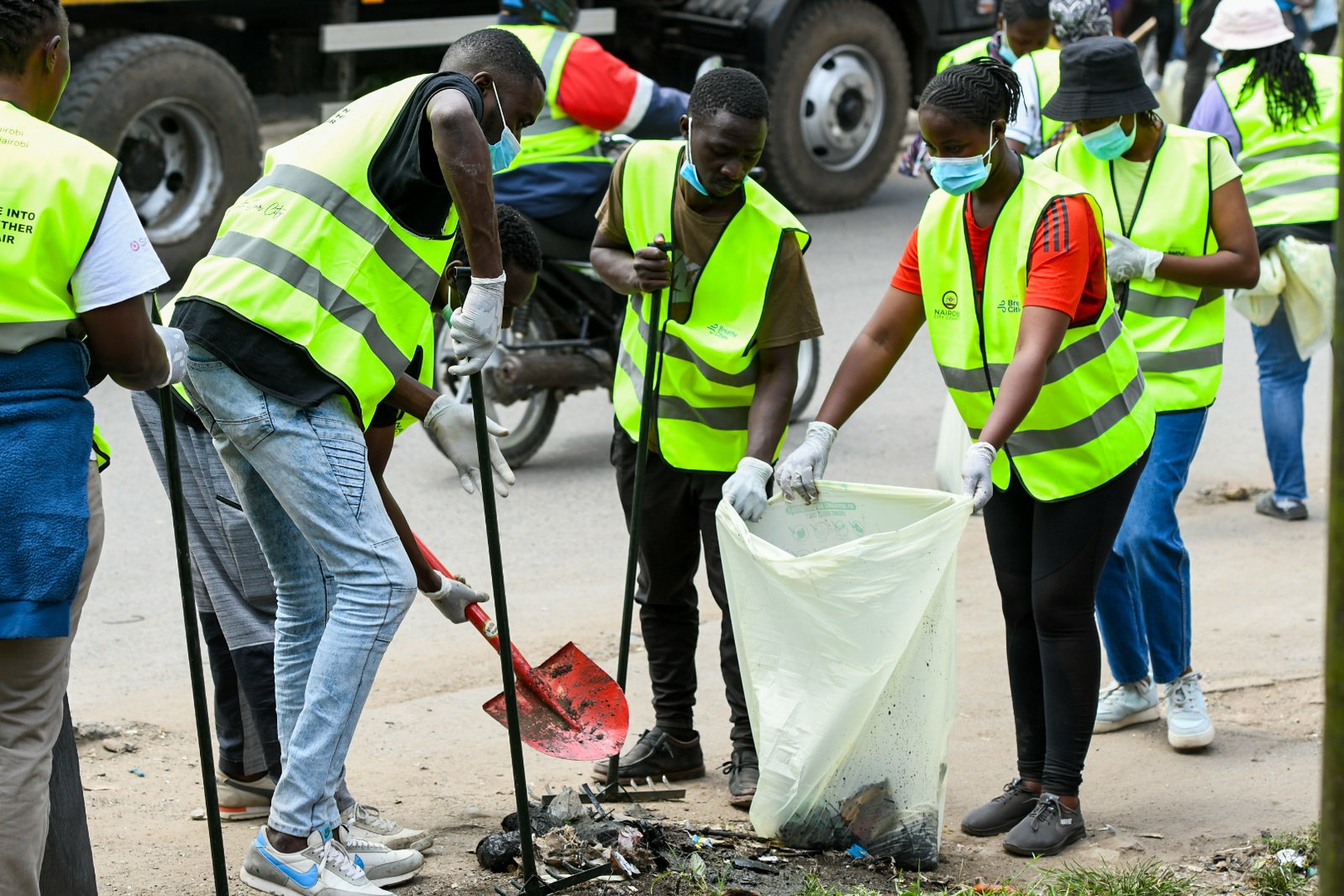
But the campaign did not stop at physical action. Participants were also introduced to digital advocacy, learning how to use their mobile phones to document environmental challenges, spotlight poor waste practices, and celebrate local champions who are working to keep their neighbourhoods clean. This blend of offline and online engagement empowered residents not only to improve their surroundings but also to raise awareness and influence behaviour across the city.
The campaign was led by youth groups, women-led organisations, and waste collectors, proving that real change starts at the grassroots. Their efforts turned everyday actions into powerful statements about dignity, health, and community pride.
Children Imagining a Pollution-Free Nairobi
Young voices played a vital role. Ten primary schools joined a creative challenge to design models of a cleaner Nairobi using waste materials readily available in their environments. Over 100 pupils imagined electric buses, green streets, and smart waste systems. Their ideas were not just imaginative; they were practical visions of a better future.
The competition sparked renewed interest in environmental clubs and inspired teachers and students to take sustainability more seriously. It showed that children are not just future leaders, they are leading change today.

Art That Speaks to the Streets
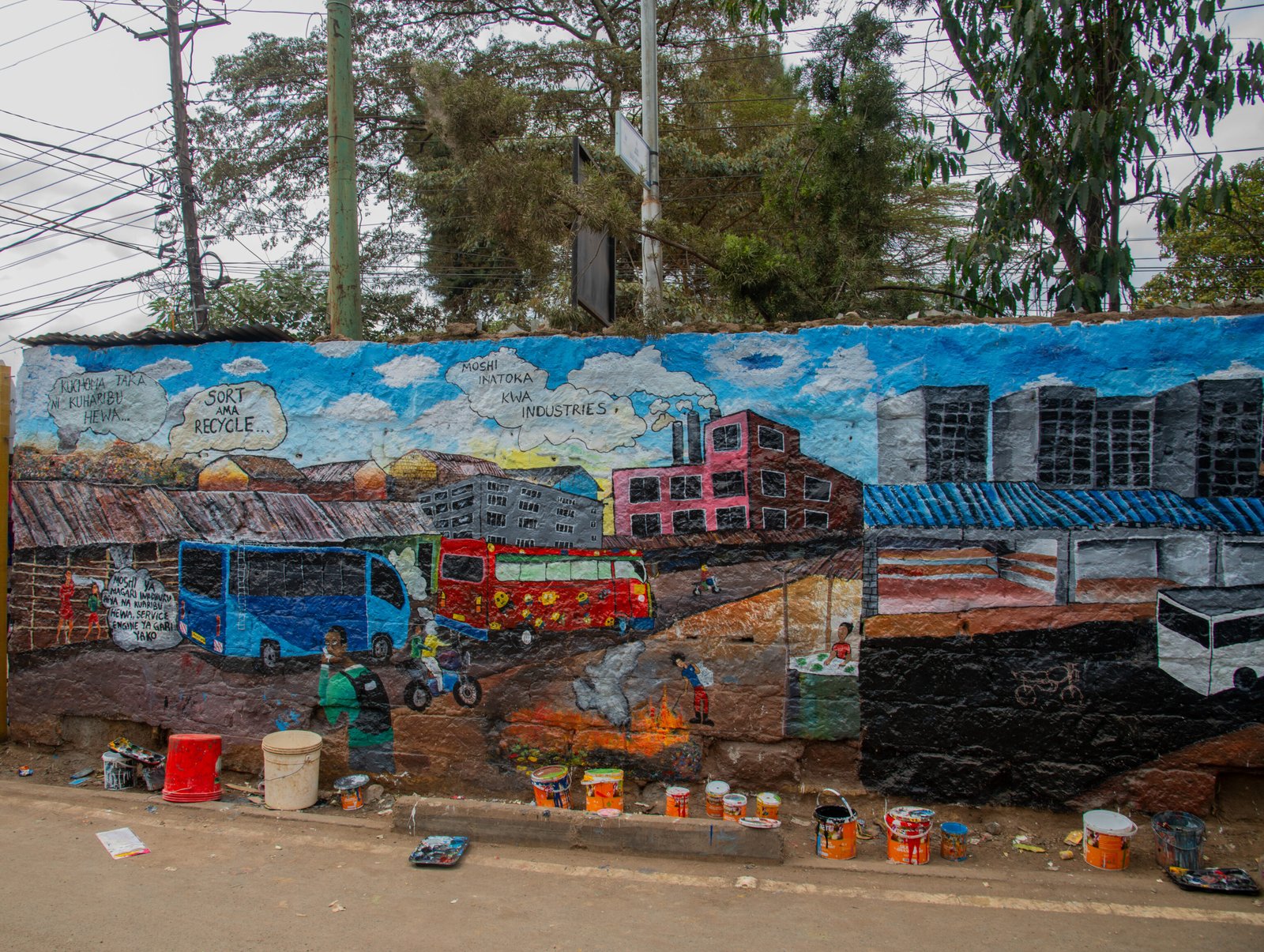
In Kibra and Korogocho, community artists worked with residents to paint murals at Olympic Primary and Daniel Comboni Primary. These murals carried bold messages about clean air and the dangers of pollution. Positioned in busy areas, they transformed ordinary walls into public classrooms, places where people could stop, reflect, and learn. The art became a lasting reminder of the campaign’s message, blending creativity with advocacy in a way that resonated deeply with local communities.
A March for Clean Air and Awareness
The campaign reached its peak with a public procession from City Hall Annexe to Central Park, drawing over 300 participants, including pupils, artists, youth groups, and city officials. Along the way, matatu (public minibuses) drivers at the KenCom bus terminus (a major city terminus) turned off their engines for five minutes in a symbolic Stop Engine moment, showing that even small actions can make a difference.
An electric matatu drove alongside a diesel one, offering a striking visual of the choices Nairobi faces in its transport future. The march wasn’t just a celebration, it was a call to action.
Reaching Millions Beyond the Streets
While hundreds took part in person, the campaign’s message reached far wider. Through digital platforms, radio, and television, #BreatheNairobi reached an estimated 26.9 million people. Stories from the clean-ups, school projects, and murals were shared across the city and beyond, amplifying the voices of communities often left out of environmental conversations.
Since the campaign, schools have launched new environmental initiatives, and community groups have continued their efforts to promote waste segregation. The momentum is growing, and the people are leading it.
A Blueprint for Urban Air Quality Action
#BreatheNairobi is more than a campaign. It’s a blueprint for how cities can tackle air pollution through community, creativity, and collaboration. Nairobi showed that when residents, learners, artists, and leaders work together, real progress is possible.
As the world looks for solutions to the air pollution crisis, Nairobi’s experience shows that clean air action does not need to wait. With the right support, community creativity and leadership can drive scalable, inclusive climate solutions, from the streets of Nairobi to cities across Kenya and the globe.